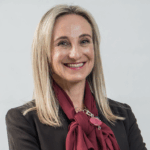
Blue Chip speaks to Francois Olivier, Portfolio Manager, Mazi Asset Management.
How would you describe your investment philosophy as it pertains to managing a hedge fund(s)?
In the hedge fund we leverage the firm’s research capability to identify investment opportunities on both the long and the short side. Where we differ from the “house process” is that we are not constrained by a benchmark, which means our best ideas are also our biggest positions in the fund, adjusted for risk and liquidity. Ultimately, the aim of the fund is to provide equity-like returns with a lower risk profile by capturing most of the market upside, while restricting downside participation.

What process do you follow to decide what instruments you will invest in?
We continuously search for opportunities, whether individual instruments or systematic strategies, which meet or exceed our return targets, ideally in ways which are uncorrelated to the balance of our portfolio. When such an opportunity increases our expected return or reduces the risk of the overall portfolio without detracting from expected returns, that instrument/position will be added.
In deciding which instruments to invest in we look to strike a balance between opportunity for returns and the risks (liquidity and volatility) of achieving those returns. If liquidity is high, volatility is low and expected returns are above our hurdle rate we are not hesitant to have a substantial investment, which for us translates into a 5% to 8% position. This was the case recently with our investment in British American Tobacco.
As our business and research capability has grown, we continuously seek to leverage the expanded collective knowledge. In late 2020, we established a dedicated team to do global investments and in 2022 we added a team that specialises in machine learning techniques. We have been systematically leveraging off their work as an additional and differentiated source of new idea generation.
What do you see as your competitive advantage?
Mazi’s motto is “Delivery through diversity” and we absolutely believe in the power of diversity. We actively seek to recruit people from different backgrounds with differing views, qualifications, ideas and approaches to tackling problems.
How do you manage risk in your hedge fund(s)?
We actively manage risk through instrument/position selection. Beyond portfolio construction we also actively track and manage the overall risk of the portfolio by controlling both gross and net exposure. On average, our net exposure is in the range of 75% to 85%, while gross exposure ranges from 100% to 130%.
What are some of the biggest risks you see in the current market environment?
We are most concerned about geo- political uncertainty and the potential impact of changes to the global economic order. This poses both a risk and potentially an opportunity, but it is the uncertainty and concomitant volatility which has, and we think will continue, to wreak havoc with portfolios. The risk of overreaction in both directions is extreme. Our approach has been to remain invested, but to favour lower risk ideas/positions.
What has been your biggest mistake in managing your hedge fund(s) and what was the impact?
During the early years of managing hedge funds we mirrored our long only funds too closely: ideas, sizing and trading. This led to a prolonged period of subpar performance, which we are still clawing back. While our ideal holding period is very long, we failed to take advantage of the inherent nimbleness the hedge fund environment affords a manager. During the second half of 2019 we changed our approach and unshackled the team managing hedge funds to act independently, still applying the same philosophy and utilising the same research output but with an ability to act faster and size positions relative to the opportunity. Our performance since then has been markedly better.
How do you see the future of the hedge fund industry?
Since regulation changed to include hedge funds under the Collective Investment Schemes Control Act there has been an expectation that hedge funds would become more mainstream. Although it took longer than anticipated, we think we are there. We expect the recent trend of inflows to accelerate as more advisors and investors seek the diversification benefits. The industry has grown by 34% to R185-billion over 12 months to the end of December 2024. We see this growth sustained over several years.
How do you generate investment ideas?
Our research process produces a dynamic ranking table, which serves as our primary idea generation tool, augmented by the output of our machine learning strategies.
What are your typical holding periods?
The holding period for long positions is typically much longer than those of our short positions. Fundamental ideas are typically held for years though the weight is varied through time based principally on valuation and momentum. Shorts, on the other hand, seldom last longer than nine to 18 months.
To what extent do you incorporate macroeconomic factors into your investment decisions?
We do pay attention to macroeconomic factors, specifically as it relates to periods of heightened uncertainty to implement out of the money downside protection. We also evaluate our bottom-up portfolio against the current environment to sense check the exposures we are taking.
What are your strategies for hedging against market downturns?
During market downturns, short positions and/or derivatives will protect the downside of our portfolios.
What are the full costs associated with investing in your hedge fund(s)?
We charge a 1% management fee and a 20% performance fee above the STeFI benchmark with a highwater mark. Trading and administrative costs are around 0,5% per annum.
How would you describe the culture in your business?
Collegial, we value diversity and teamwork.
About Francois Olivier
Francois Olivier began his investment career in 2000 and joined Mazi Asset Management in 2013. He is a senior portfolio manager and a key member of Mazi’s executive committee, bringing extensive experience in investment management. Francois completed his accounting articles with Ernst & Young in 1996 and his perspective is shaped by a significant tenure in San Francisco during the early part of his career. His strategic insights and commitment to value-driven investment solutions continue to strengthen Mazi’s performance-focused approach to asset management
Mazi Asset Management
Established in 2006, the firm has grown steadily to manage assets of approximately R50-billion. Our purpose is clear: to manage, protect and grow our clients’ capital through disciplined investment strategies and a long-term perspective. Headquartered in Johannesburg with an office in Cape Town, Mazi is proudly 100% staff-owned. Our independence empowers us to make objective, long-term investment decisions – free from external pressures and in the best interests of our clients.
African Roots. Global Vision.
We believe that exceptional investment outcomes are driven by diversity of thought, experience and perspective. In a dynamic and often uncertain investment landscape, our research-led and forward-looking approach helps us uncover high-quality opportunities, both locally and globally.
Philosophically speaking
Our investment philosophy is grounded in fundamental valuation, discipline and long-term thinking. We combine deep analysis with an entrepreneurial mindset to deliver sustainable, high-impact returns for our clients.
Investment capabilities
Equities
- South Africa Equity
- Global Equity Fund
- Africa Equity Fund
- Shari’ah Equity Fund
- Property Equity Fund
Multi-Asset
- High Equity Balanced Fund
- Stable Fund
- NextGen Flexible Fund
Fixed Income
- Money Market Fund
- Flexible Income Fund
Alternatives
- NextGen Long Short Qualified Investor Hedge Fund
- Mazi Long Short Qualified Investor Hedge Fund
Contact information:
- Phindile Moteane
- Telephone: 010 001 8300
- Email: clientservice@mazi.co.za
- Website: www.mazi.co.za