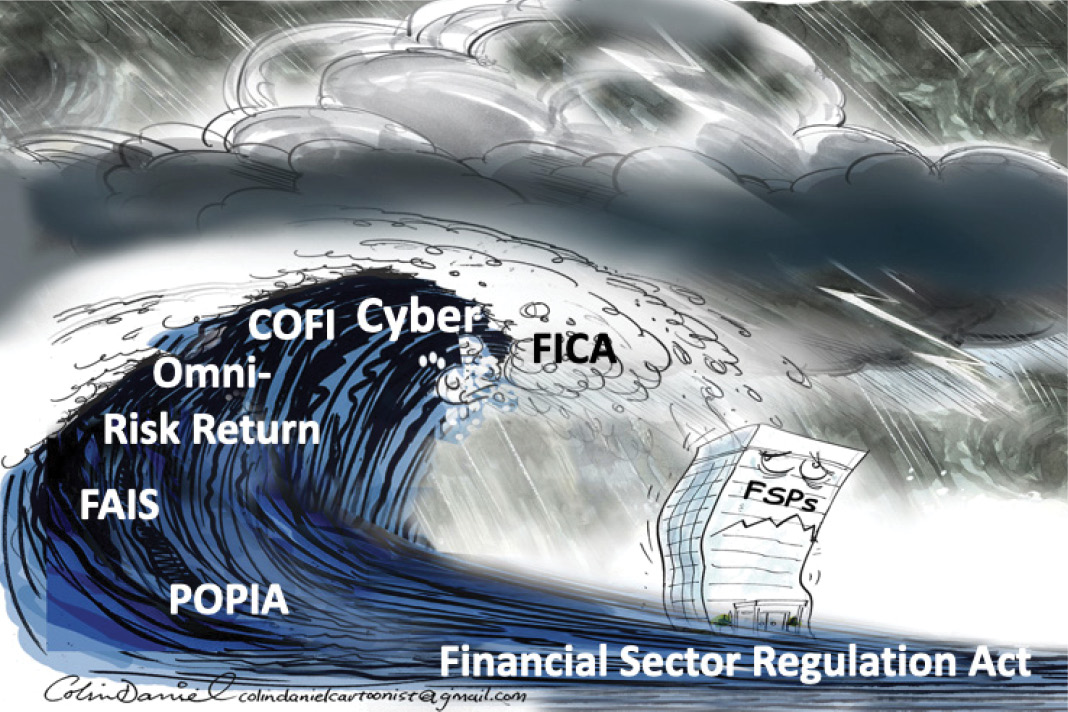
The water is never static; it shifts with tides, wind and swell. In the same way, the environment in which financial planners operate is shaped by constant regulatory movement: new conduct standards, emerging risks and changing expectations from the regulators.
Skilled surfers do not simply paddle out to sea and hope for the best. They pause on the shoreline, studying the sets forming beyond the break, identifying rips, currents and hidden reefs. Likewise, a prudent financial planner scans the horizon for regulatory change, hidden risks, upcoming COFI requirements, enhanced Anti-Money Laundering (AML) duties as well as evolving expectations around culture, governance and consumer outcomes.
Just as each wave shapes its own size and carries its own energy, every piece of legislation and supervisory guidance brings its own momentum and impact. Some waves are gentle rollers, representing manageable regulatory updates that simply require small adjustments. Other waves arrive with force, demanding agility, preparation and technical skill. The key is to anticipate rather than react, choosing the right position long before the swell rises.
Ultimately, surfers who thrive are those who respect the ocean, read its patterns and adapt with wisdom. Financial planners are no different. Those who understand the regulatory “conditions”, who remain alert to shifting tides and who cultivate strong risk-management “balance”, will ride the waves with confidence, while those who ignore the warning signs risk being caught inside.

For the surfer, not all parts of the wave carry the same level of risk. The water at the base of the wave is comparatively settled. This part represents the legislation and regulatory expectations that have already been absorbed into everyday practice. These are the familiar, established requirements that experienced financial planners have learned to navigate with confidence. They have already been integrated into the rhythm of the business.
Interestingly, I never hear financial planners talk to the Financial Sector Regulation Act (FSR). It seems that the FSR Act has been absorbed into the foundation of FSP businesses. The same can almost be said for the Protection of Personal Information Act (POPIA) and the Financial Advisory and Intermediary Services Act (FAIS). After all, we have celebrated the 21st anniversary of FAIS in 2025. Most FSPs have got the basics embedded in their businesses.
But as the swell moves forward, it begins to rise, gaining shape and energy. This is where new reforms gather momentum, shifts in conduct standards, emerging regulatory priorities or impending legislation such as the Conduct of Financial Institutions Act (COFI). The swell is not yet dangerous, but it signals that the conditions are changing. You see it coming; the COFI Bill, signalling a transformation in the regulatory landscape. Others might dismiss it as just another swell, but you will do well to recognise its scale and potential.
This is the shift that could define your future position in the market. COFI will become the regulatory compass for the next 30 to 50 years; the framework that will shape the entire financial sector, impact client outcomes and define what good conduct looks like for generations of advisors and institutions.
COFI has been seriously talked about since the FSR Act was signed into law in August 2017, and then when the establishment of the Financial Sector Conduct Authority (FSCA) and Prudential Authority (PA) commenced on 1 April 2018, COFI gained further momentum. It appears that COFI will be promulgated in 2026, and therefore, it moves up towards the “crest” of the regulatory wave, and so does the FSCA’s proposed Omni-Risk Return. A lot will happen on the COFI front in 2026. COFI has moved its way from the face of the wave – the vertical or angled front surface of the wave as it rises to the lip of the wave – to the upper edge of the wave that pitches forward as the wave begins to break. This becomes the dangerous part when it throws over. We are almost on the crest of the wave.
The real risk lies at the crest, where the wave begins to break. This is the point at which regulatory change becomes immediate, enforceable and consequential. The crest symbolises new rules coming into force, fresh supervisory expectations, tighter enforcement and the cultural requirements that regulators are increasingly prioritising. It is here that financial planners are most exposed: misjudging the timing, ignoring the build-up or reacting too late can result in being caught off balance.
The Financial Intelligence Centre Act (FICA) commanded centre stage in the regulatory landscape since the Financial Action Task Force (FATF) placed South Africa on its grey list of jurisdictions subject to increased monitoring in February 2023. The FATF removed South Africa from its grey list on 24 October 2025. However, FICA still occupies the crest of the regulatory wave; the point of maximum exposure for financial planners.
While some of the regulatory base is settled, FICA continues to break with intensity, demanding unwavering accuracy from financial planners to avoid significant legal and reputational consequences. Cybersecurity has crept up the swell of the regulatory wave towards the crest over the last couple of years, and financial planners will do well to pay serious attention to cybersecurity and cyber insurance in 2026.
Prudent planners, like skilled surfers, watch the swell closely, anticipate when the crest will form and position themselves early. By understanding not only the settled base but also the rising curve of change, they avoid unnecessary risk and ride the wave of regulatory reform with stability and control. The skilled surfer, like the prudent planner, stays calm under pressure.
Adrenaline may be surging as you see the face of the wave swelling, but you force yourself into controlled breathing. Panic wastes energy. The ocean favours the surfer who can keep his movements clean and decisive. Like Stephen R Covey wrote, “Be proactive.” Plan your positioning for 2026 carefully, seek counsel, then trust your read, trust your plan and follow through with it.
When the ride is over, the shoreline will tell the story. Those who read the water early, placed themselves well and committed at the right moment arrive with momentum, purpose and the confidence to face the next set of regulatory changes as COFI will be phased in over the next few years. Those who misjudged the wave are still paddling, chasing what is already gone. In the surge of FICA, cybercrime and COFI, the wave you choose and how you choose it will define whether you make it to shore ahead of the break or are left stranded in its wake.