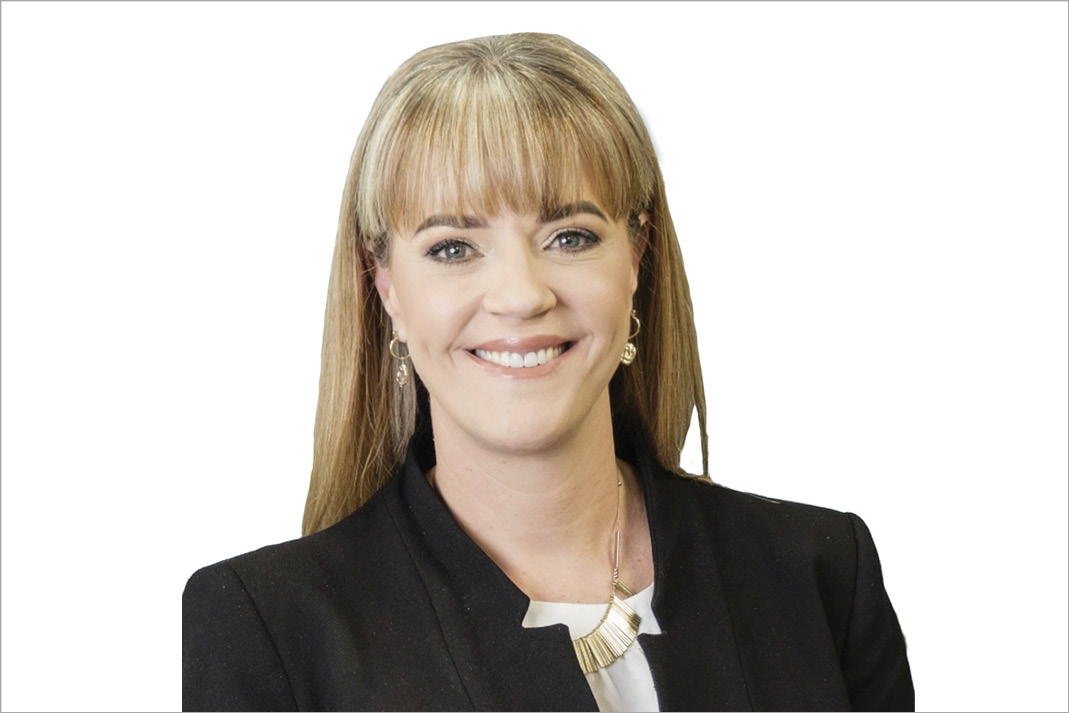
Many South Africans are re-evaluating their financial habits in the face of rising living costs. Yet according to Therese Grobler, Head of Wealth Management at Momentum Financial Planning, a persistent obstacle to financial resilience is not inflation, income pressure or market volatility; it is the deeply ingrained belief that saving is something you do “when you can”. This on-and-off approach, she argues, is quietly eroding South Africans’ ability to build long-term wealth.
Grobler challenges the misconception that wealth creation requires a windfall or large lump sum. Instead, she demonstrates how small, disciplined and consistent contributions – amplified by the exponential power of compound growth – transform modest habits into meaningful financial security. Her message is clear: the perfect time to start does not exist; but the cost of waiting is enormous.
Women leading wealth strategy
As a woman leading wealth management in a sector still largely dominated by men, Grobler brings a perspective shaped by both professional expertise and lived experience. She believes women contribute a unique blend of emotional intelligence, long-term thinking and relational depth to financial planning – qualities that are essential in a world where clients seek guidance, not just products.
“Women tend to approach. wealth as a multi-generational, holistic journey,” she explains. “We look beyond returns and consider stability, dignity and the long-term wellbeing of families. That mindset is incredibly powerful in financial planning.”
This strength is particularly relevant in South Africa, where financial stress is often intertwined with household. responsibilities. Women frequently manage both caregiving and budgeting roles, making them acutely aware of how financial decisions ripple across a family’s future.
“There are so many challenges balancing our careers and family responsibilities. Meaningful change requires intentional mentorship, visible female role models and equal access to leadership opportunities. Flexible work environments that allow talented professionals to thrive at different stages of life are necessary. When organisations create these conditions, the entire profession benefits.”
Yet barriers remain. Women entering the financial planning profession still face structural challenges: limited mentorship, uneven access to leadership pathways and the persistent stereotype that finance is a “technical” rather than relational field.
“It’s ultimately about the value that the individual brings to the role. With that as background, it’s important to ask why we have diversity. It is to ensure that the combined effort is more valuable to an organisation than the individuals. It is about equal value. It’s not about the individual. Financial planning is science, but it’s also an art. The profession benefits from diverse perspectives and women continue to make such a big contribution through both our capability and ability to connect with clients,” Grobler explains.
The myth of the windfall
A damaging misconception Grobler encounters is the belief that investing requires a large capital base. “People think they need R50 000 or R100 000 to begin,” she says. “So, they wait. And while they wait, they lose the most valuable ingredient in wealth creation: time.”
A South African who invests R500 per month for 15 years contributes R90 000 in total. At an average annual growth rate of 10%, that investment grows to approximately R207 000. But extending the same habit to 30 years, doubling the contribution to R180 000, does not double the outcome. It grows to over R1.1-million.
This is the mathematics of compound growth: returns earn returns and time multiplies the effect.
For financial advisers, dismantling the windfall myth requires practical conversations. Grobler encourages advisers to show clients real numbers, timelines and scenarios. “When clients see the maths, they understand that consistency, not capital, is the engine of wealth. They realise investing is not reserved for the wealthy. It’s accessible to everyone.”
She emphasises behavioural coaching. Advisers must help clients shift from reactive (“when I have extra”) to proactive investing (“because my future requires it”). This reframing is essential in a country where financial pressure often leads to short-term decision-making.
Retirement rules
Momentum’s Budget 2026 commentary highlighted a sobering statistic: only around 6% of South Africans can retire comfortably. For Grobler, this is not just an economic indicator, it’s a behavioural one. “This number tells us that South Africans are struggling because their financial habits are inconsistent, reactive and often disrupted by life’s pressures.”
The gap is not merely about income. It’s about structure. Many South Africans save for emergencies but do not invest for long-term growth. Others withdraw retirement savings during job changes, losing decades of compounding. And many underestimate how early they need to start.
“Research, and even industry commentary, continues to reference the longstanding reality that only a small portion of South Africans can retire comfortably. Advisers play an important role in helping clients to remain invested. They must preserve retirement savings and stay focused on their long-term goals rather than the short-term market noise movements in reaction to fear.
According to Statistic South Africa’s General Household Survey 2025, 42.6% of households in South Africa are headed by women. South Africa has approximately 19.6-million households according to the same survey. Based on this figure, this translates to roughly 8.3-million female-headed households.
Financial advisers, she argues, must address these behavioural gaps with empathy and realism. “We need to meet clients where they are, not where we wish they were. And then we help them build habits that survive real life.”
Financial independence for women
Financial independence for South African women looks different today than it did a decade ago. In 2016, the conversation centred on access – access to employment, banking and financial products. In 2026, the conversation has shifted to agency.
“Women want control,” Grobler says. “Control over their income, investments, retirement and ability to make choices without financial fear.” This shift is driven by several trends:
- Higher female participation in the workforce.
- Greater awareness of gender-based financial risks.
- A cultural shift towards women managing their own portfolios.
- The rise of female financial advisers.
Financial independence is no longer defined by income alone. It is defined by resilience; the ability to withstand shocks, navigate transitions and build a future that is not dependent on external circumstances.
Why advisers matter more than ever
Grobler emphasises that wealth creation is not a once-off event. It evolves across life stages: entering the workforce, managing family obligations, navigating career transitions and preparing for retirement. Each stage introduces new risks and priorities. This is why the relationship between client and adviser must be continuous, not transactional. “A financial plan is a living document,” she says. “It must adapt as life changes.”
Advisers play a critical role in maintaining structural discipline – balancing liquidity needs with long-term growth, preventing emotional decision-making during market volatility and ensuring portfolios remain aligned with evolving goals. “Small, consistent habits, supported by professional guidance, create dignity, security and independence over time,” she adds.
A legacy
When asked what legacy she hopes to leave, Grobler’s answer is simple: opportunity.
“I want young women entering financial planning to see a sector where they can lead, innovate and thrive, where their strengths are recognised as assets, not exceptions.”
She hopes her work contributes to a future where women are not only participants in financial planning but architects of its evolution, shaping how South Africans build wealth, how families plan and how the industry defines excellence.
Her message to young women is clear: “Your voice matters. Your perspective matters. And your leadership will shape the financial wellbeing of generations.”
In a country where financial pressure is real and rising, Grobler’s advice is a reminder that wealth is not built in moments of abundance, but in moments of discipline.