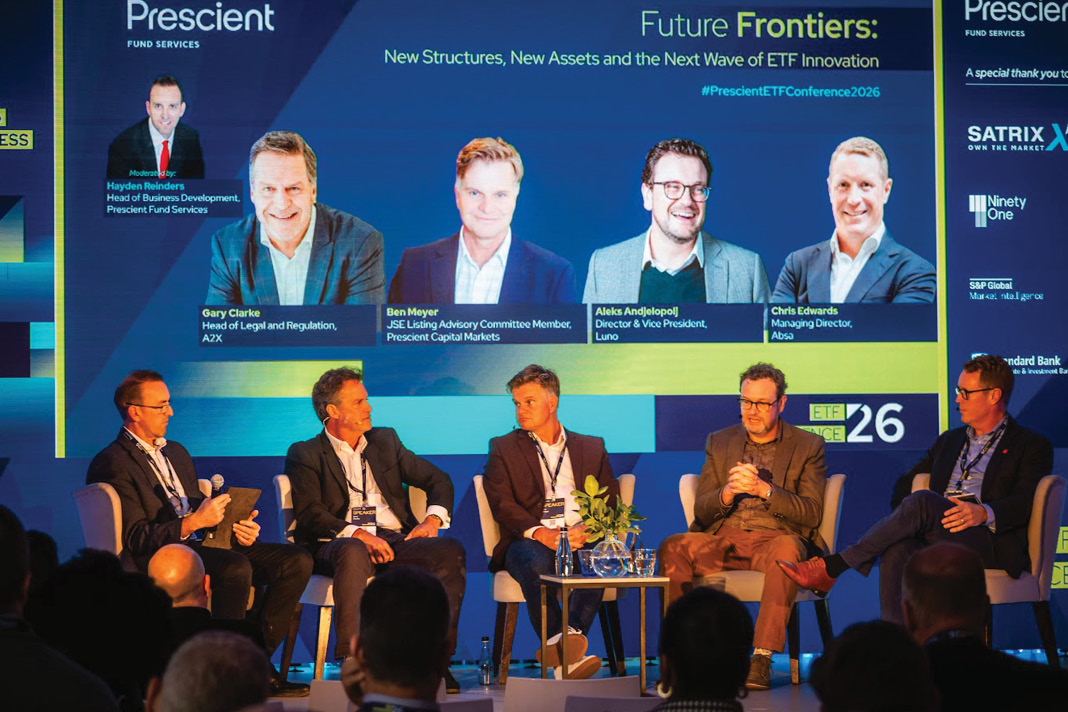
Prescient Fund Services, a global full-suite fund services firm, hosted its second annual ETF Industry Conference in Cape Town, bringing together asset managers, allocators, exchanges, platforms and other market participants to discuss how South Africa’s exchange traded fund (ETF) market can move from rapid product growth to broad-based adoption.
Themed ‘From Foundation to Future: Scaling South Africa’s ETF Ecosystem’, the conference opened with remarks from Craig Mockford, Chief Executive Officer of Prescient Fund Services. “At our first conference, we looked back on 25 years of ETFs in South Africa. Twelve months on, the conversation feels very different. We are no longer asking whether ETFs belong here. The question now is what it takes to move from momentum to scale,” said Mockford.
There are now 141 ETFs listed on the JSE, with around R275 billion in assets under management, and actively managed ETFs (AMETFs) have grown from 10 in August 2024 to more than 50. “What was in essence an experiment three years ago has become an established category in its own right.
But innovation alone is not enough,” said Mockford, pointing to the 2026 Prescient ETF Evolution Report, in which many industry professionals still describe the market as “growing, but misunderstood”. “Awareness is running ahead of adoption, which tells us the challenge in front of us is not demand, but execution.”
Behind every ETF investment, he reminded delegates, is an ordinary investor. “A retirement fund member, a policyholder, a family saving for their future – they are the ones who benefit if this industry becomes more efficient. No one builds an ETF market on their own. It takes all of us: the managers who list products, the platforms that carry them, the advisers who educate and the market makers who quote.”
Following a keynote by strategist Pierre du Plessis, founder of Be Brave, the programme featured presentations, fireside chats and panel discussions with senior representatives from Prescient Management Company, 10X, Satrix, 1nvest, Oribi Capital Partners, Adviceworx, EasyETFs, Investec, Ninety One, INN8 Invest, Prescient Investment Management, Standard Bank, Spirebay, STANLIB, RisCura Solutions, Ultumus, Prescient Securities, Arysteq, Absa, Omba Advisory & Investments, A2X, Prescient Capital Markets and Prescient Fund Services in Ireland.
With attendance doubling from the inaugural event, Ben Meyer, Managing Director of Prescient Capital Markets, measured the market against the recipe for any revolution in his presentation, The ETF Revolution: widespread discontent, an ideological shift, a trigger event, a weakening of the established order and, finally, mass participation. “In South Africa, we’ve just started. But I do think we’re at that tipping point where we’re going to start seeing real movement in the ETF space,” he said.
Moderating the Putting ETFs to Work panel, Hayden Reinders, Head of Business Development at Prescient Fund Services, steered the discussion beyond the active-versus-passive debate. “The more interesting question is what role the ETF actually plays in a portfolio,” he said.
Panellists from Adviceworx, Ninety One, Investec and EasyETFs described a market where younger, digitally native investors are driving retail adoption through app-based platforms, while advisers remain central to reaching scale. Platform access, particularly on LISPs, and trading costs were named as the key frictions, while faster settlement and a broader product shelf, from retail hedge fund and crypto ETFs to single funds with both ETF and unit trust share classes, were seen as the next steps.
The conversation then turned to the market’s largest untapped pool of capital. “The question is not whether ETFs work, but why institutional money hasn’t followed, and what it would take to change that,” said Niki Giles, Head of Strategy at Prescient Fund Services, who moderated The Institutional Imperative panel. “Much of the answer lies in the chain of advice: the consultants who research and recommend, the asset managers who build the products, and the boards who decide.”
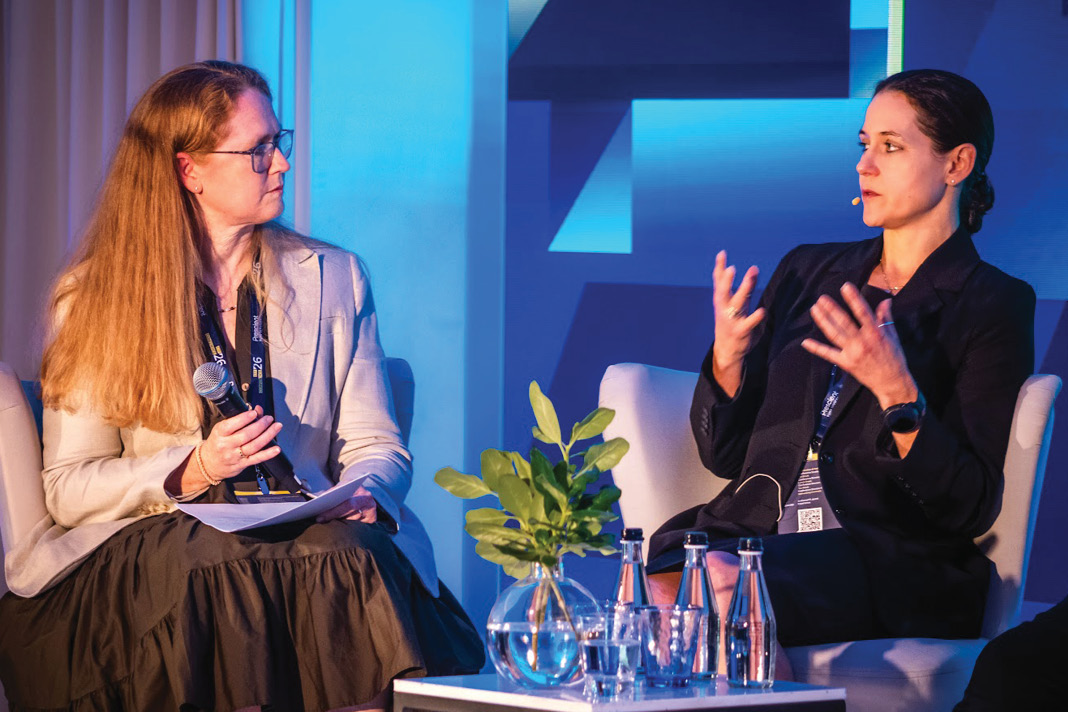
Panellists, including an institutional investment consultant and a trustee, noted that ETFs rarely feature in trustee discussions – less from resistance than unfamiliarity – and that large funds often favour segregated mandates. They also challenged a common misconception: an ETF’s liquidity is set by its underlying market, not its on-screen trading volume, because market makers can create and redeem units as demand requires.
Closing the conference, Kim Gibb, Chief Executive Officer of Prescient Management Company, said: “The opportunity isn’t in doubt – it’s here. The real question is how we unlock it together.” The same themes, she noted, had come up throughout the conference: structure is a strategic choice and listing is the beginning, not the finish line. “The question isn’t where your first assets come from, it’s where the next ones come from.”
“South Africa has real advantages: one central exchange, some of the most innovative retail platforms around, and a growing awareness of what ETFs can do. But we need advisers to feel confident using them, platforms to make them easy to hold and investors to understand them,” said Gibb. “Liquidity, execution and market making aren’t back-office details – they are the investor experience.”
Gibb called on the industry to measure success by more than the number of new listings. “Are ETFs easier to access? Are advisers more comfortable using them? Are institutions using them more? Has trading improved? And most importantly, are South Africans benefiting? Innovation opened the door, but execution, collaboration and commitment will decide what we do together.”