How does Protea prioritise conflicts between quantitative and fundamental views?
When the two views clash, we generally do not take a position, as both must find the opportunity attractive. Where they differ to some degree, we take a smaller position in the stock.
How has your “quantamental” model adapted to the rise of AI-driven trading?
The rise of AI-driven trading has increased the focus on short-term earnings announcements and led to sharp market reactions to surprises. This creates opportunities for our approach, which focuses on longer-term trends in fundamental data rather than shorter-term, often noisy signals.
What gives Protea’s quantitative process an edge in global markets?
Our edge lies in our ability to monitor the gap between price and fair value across more than 10 000 global stocks. Our process dynamically adjusts expected returns as prices and estimates change, allowing us to identify opportunities across markets and sectors. While our stock selection has been strong, portfolio construction had historically detracted from this, but recent adjustments have strengthened our overall edge.
What is your risk-reduction approach when expected returns do not materialise?
We maintain highly diversified portfolios to limit the impact of any single source of returns. We don’t apply rules-based stop-losses; we use position-sizing limits, which may require covering a short if it moves sharply. This allows portfolios to weather shocks and take advantage of dislocations, rather than cutting positions at inopportune times.
How did your system handle the recent volatility in global “Big Tech” earnings?
The biggest test to our approach was the volatility in earnings during the Covid-19 period, when many financial trends broke down. We adjusted our models accordingly, and those improvements have since stood us in good stead. While we missed some inflection-point opportunities, such as Nvidia early in the AI boom, these lessons continue to refine our process.
How does automation help guard against behavioural biases in extreme markets?
Human behaviour tends to swing between fear and greed. An automated, valuation-based system that tracks fair value helps keep us grounded in reality and prevents bias-driven decisions.
How do you manage cash drag while ensuring liquidity for daily redemptions?
A short book generates cash, ensuring our hedge funds maintain a comfortable balance to meet redemptions while preserving the long-short structure. Our diversified, quantamental approach identifies a broad set of above-average ideas, rather than concentrating on a few high-conviction positions.
How does your “scuttlebutt and mosaic theory” inform your decisions and qualitative process?
We use alternative information sources and expert networks to build multiple perspectives on a company, rather than relying solely on company-issued data. This “scuttlebutt” approach, combined with the “mosaic theory” of piecing together data points, helps form a more holistic view.
How do you create space for thinking?
Our work-from-home model creates space to process information more effectively. While investors have access to similar data, the edge lies in how it is interpreted. Intellectual humility means recognising the uncertainty of the future and that one will often be wrong, which underpins our focus on building highly diversified, resilient portfolios rather than over-confident forecasts.
How have you institutionalised the “quantamental” process beyond a single individual?
Our quantitative models are maintained by Dr Shinhye Chang, while Jean Pierre Verster leads the fundamental analysis with support from external research providers. We continue to expand the team and have embedded automation across both investment and operational processes to reduce reliance on individuals.
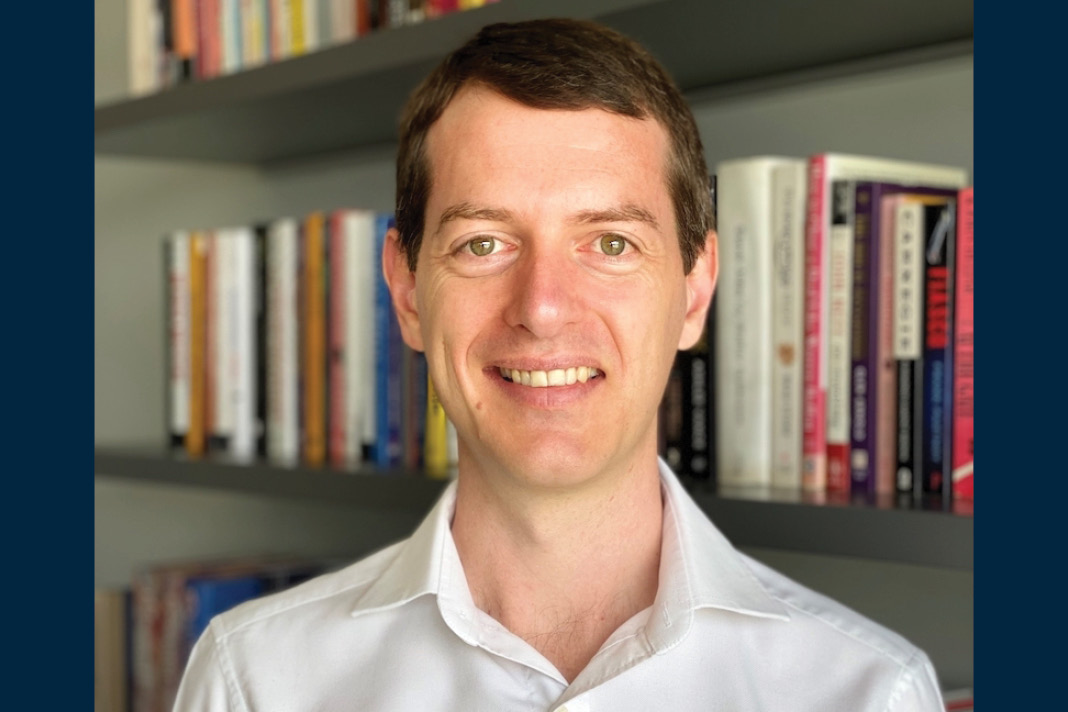
About JEAN PIERRE VERSTER After roles at Melville Douglas Investment Management and 36ONE Asset Management, Jean Pierre partnered with Fairtree Asset Management in 2016 to launch the Protea range of hedge funds. In 2019 he founded Protea Capital Management as a stand-alone investment manage-ment business. Between 2015 and 2024, Jean Pierre also served as an independent non-executive director at Capitec Bank Holdings and its subsidiaries, where he was chairman of the audit committees. He holds the CA(SA), CFA and CAIA designations.Collective Investment Schemes are generally medium-to long-term investments. The value of participatory interests (units) may go down as well as up. Past performance is not necessarily a guide to future performance. Collective investments are traded at ruling prices and can engage in scrip lending and borrowing. A schedule of fees, charges and maximum commissions, as well as a detailed description of how performance fees are calculated and applied, is available on request from the Manager. The Manager does not provide any guarantee in respect to the capital or the return of the portfolio. Excessive withdrawals from the portfolio may place the portfolio under liquidity pressure and in such circumstances, a process of ring-fencing of withdrawal instructions and managed pay-outs over time may be followed. Commission and incentives may be paid, and if so, are included in the overall costs. The Manager may close the portfolio to new investors in order to manage it efficiently according to its mandate. Prices are published daily on the Manager’s website.