Hedge funds were once synonymous with aggressive equity trading and leverage. As market volatility has increased and traditional diversification has become less reliable, fixed-income hedge funds have emerged as an important and often misunderstood component in modern portfolio construction.
Used as a structural allocation, they aim to improve portfolio behaviour by stabilising returns, supporting income generation and increasing resilience across market regimes.
In today’s environment of inflation uncertainty, shifting rate cycles and geopolitical shocks, their ability to actively manage duration and downside risk can add meaningful diversification.
Fixed-income hedge funds in context
Fixed-income hedge funds are commonly grouped under global macro or relative value, but the label matters less than the design: actively managing interest-rate, credit and volatility risk to deliver more consistent outcomes with less reliance on market direction.
- Yield-curve and duration positioning
- Relative value and spread relationships
- Carry and roll-down opportunities
- Hedging and downside risk management
That puts them outside a simple equity-bond framework: the aim is not to chase returns, but to improve overall portfolio behaviour, especially when historical correlations break down.
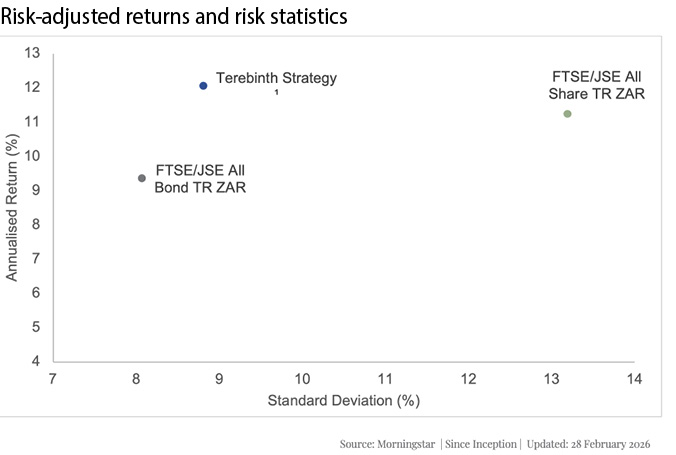
How fixed-income hedge funds strengthen portfolios
In practice, they strengthen portfolios through three connected actions: stabilising drawdowns, improving income efficiency and staying resilient across market regimes.
Instead of relying on bonds to diversify equity risk, fixed-income hedge funds actively manage key drivers of volatility – duration, curve exposure, spreads and hedges. Within Terebinth’s mandates, this is reinforced by predefined stop-loss rules: risk is reduced as drawdowns reach set thresholds and neutralised if drawdowns extend further.
Income can be sourced more efficiently by combining carry, roll-down and relative value opportunities along the curve, reducing dependence on long-duration exposure or a single credit bet. The result is a strategy-set built to operate through rising rates, inflation shocks, liquidity stress and geopolitical events, supporting more robust outcomes across the cycle.
Terebinth Capital implements a mix of approaches across time horizons:
- Tactical-technical: event-driven positioning around key data and policy communication.
- Structural: exploiting technical and intra-market dynamics (eg auctions and switches).
- Strategic: expressing longer-cycle views on growth and inflation relative to consensus.
How Terebinth’s philosophy and process strengthen outcomes
At Terebinth Capital this structural role is built into the investment philosophy, research process and risk framework.
The process starts by mapping how growth, inflation and policy can drive rates through a cycle. Rather than relying on point forecasts, Terebinth uses scenario analysis to build positions that can remain robust across multiple outcomes.
The year 2022 provided a clear stress test: as inflation rose and policy rates repriced sharply, long-only bond exposure suffered significant drawdowns as yields moved higher. Fixed-income hedge funds can respond by reducing or hedging duration, repositioning along the curve and focusing on relative-value opportunities rather than holding static interest-rate risk.
In that environment, the Terebinth Fixed Income Macro FR Retail Hedge Fund delivered a positive calendar-year return in 2022.
Qualitative insight and quantitative modelling are combined, with risk management central: disciplined position sizing, diversification across instruments and curve points, active hedging and clearly defined stop-loss rules. The objective is not perfect prediction – it is consistent risk control, seeking to protect capital and deliver steadier outcomes as conditions change.
Benefits for retail investors
When structured appropriately for retail access, fixed-income hedge funds can offer:
- Diversified sources of income
- Lower drawdowns than equity-centric strategies (typically)
- Flexibility through active hedging and risk management
- A downside-protection focus rather than benchmark tracking
It is worth noting that returns from fixed-income hedge funds can vary over time and may reverse when funding conditions tighten, volatility rises, liquidity deteriorates or credit spreads widen, which can lead to periods of negative performance. While hedging and derivatives are commonly used to help manage risk, they cannot eliminate it.
For many investors, consistency and capital preservation can matter more than peak returns. Used alongside traditional assets, fixed-income hedge funds can help address that need.
Application in annuities and outcome-driven solutions
In linked annuities and retirement-income portfolios, sequence-of-returns risk matters: poor early outcomes combined with withdrawals can permanently impair capital.
By targeting lower volatility and smaller drawdowns, fixed-income hedge funds can support income sustainability. Tools such as rate hedging, active duration management and scenario analysis are aligned with how insurers manage long-dated liabilities.
In practice, institutions often fund fixed-income hedge funds from a broader alternatives or hedge fund allocation, which for many portfolios sits in the mid-single digits to low double digits.
In retail retirement solutions, this is typically implemented as a measured sleeve within the defensive allocation – sized to improve draw-down outcomes without dominating overall portfolio risk.
A structural allocation for modern portfolios
 Fixed-income hedge funds are increasingly used not as tactical trades, but as structural complementary allocations within modern portfolios.
- They do not replace equities.
- They do not replicate traditional bond funds.
Instead, they aim to add a third defensive engine – diversified income, stability and resilience when uncertainty is the norm and traditional asset-class relationships fail.
For advisors and investors, the question is how to build portfolios that can endure shifting regimes. Fixed-income hedge funds are designed to contribute by diversifying return drivers, managing downside risk and supporting more reliable income, thus strengthening portfolio behaviour when markets change.
About MARIO SCHOEMAN |
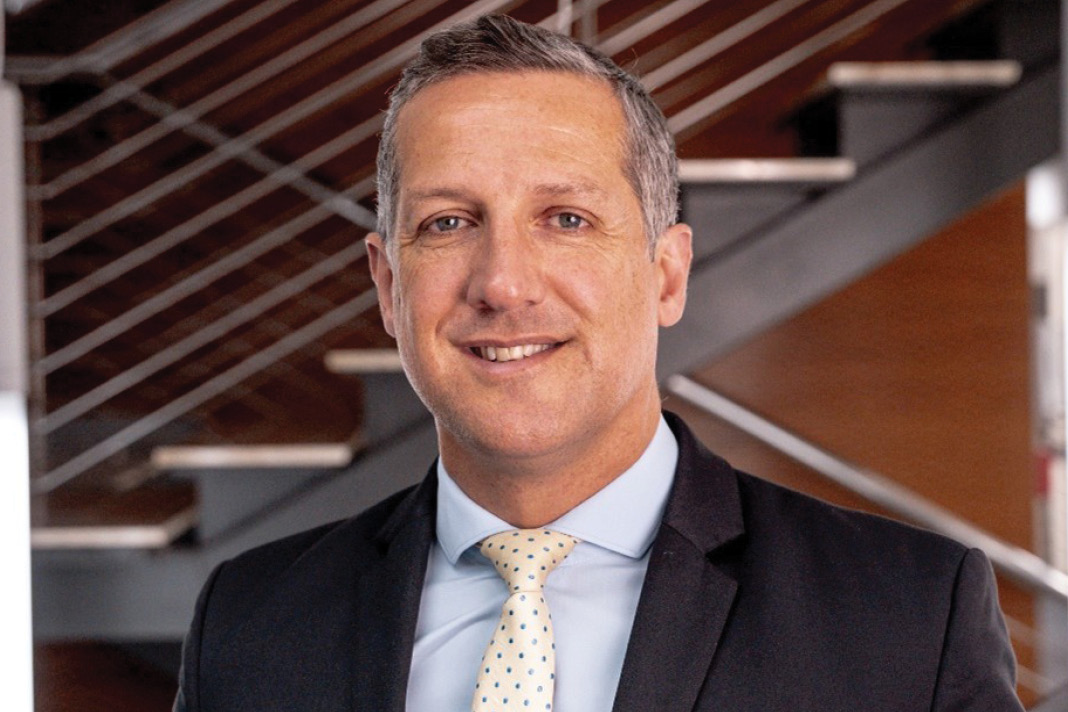
Mario Schoeman joined Terebinth Capital (Pty) Ltd as the Head of Retail Business in September 2024. He has more than two decades’ experience in the financial services industry with multi-national life-insurers, banks, international multi-family office and a boutique asset manager. He served in multiple executive roles with responsibilities for strategy across various jurisdictions, including the institutional- and retail markets, business development, marketing and product innovation. Mario holds a Bachelor of Science from the University of Stellenbosch and a Master of Business: Leadership from UNISA