Real assets: the strategic case for inflation defence
Cohen & Steers is a leading global investment manager specialising in real assets and alternative income, focused on delivering attractive returns, income and diversification. Blue Chip finds out more in this interview with Sean Cooney, Head of UK Wealth, Global Wealth Management at Cohen & Steers.
Sean Cooney, Head of UK Wealth, Global Wealth Management, Cohen & Steers
Cohen & Steers’ research suggests the world has moved from an era of abundance to an era of scarcity. How should South African financial advisors interpret this shift?
Since 2020, four major supply shocks have changed the investment backdrop. The world is moving away from an era shaped by globalisation and abundant supply, towards one where supply chains are more fragile, tariffs are embedded and countries are near-shoring or friend-shoring critical resources. That is pushing investors back towards “old economy” sectors such as energy, metals and agriculture, where demand remains strong, but supply is increasingly constrained.
For South African advisors, this is not an abstract shift. South Africa already lives with scarcity dynamics every day, from energy shortages and infrastructure strain to commodity volatility. The key takeaway is that portfolios built mainly around traditional stock-bond allocations may not be enough in a more inflation-prone world. Advisors should consider listed real assets, including global real estate, infrastructure, natural resource equities and commodities as strategic tools for inflation sensitivity, diversification and resilience.
Given the current macroeconomic environment, why are equities and bonds so susceptible to risk?
Stocks and bonds are vulnerable because they are increasingly being driven by the same pressures: slower real growth, stubborn inflation and more volatile interest rates. In this environment, the next decade may reward a different set of winners than the last one. Higher inflation expectations can squeeze equity margins, while bonds can reprice sharply as rates move, leaving investors exposed on both sides of the traditional 60/40 portfolio.
That is why inflation beta matters. Traditional stocks and bonds do not naturally provide it, but a real assets allocation can help add that sensitivity to a portfolio.
Why do real assets behave differently when inflation surprises to the upside?
Real assets tend to respond differently because many of their cash flows, pricing mechanisms and asset values are linked to the price level. When inflation comes in above expectations, rents, regulated tariffs, commodity prices and resource-producer margins can adjust upwards. Higher rates can create concern, but the same forces that push rates higher can also support rents, which is particularly important for real estate.
For South African investors, these inflation-linked characteristics help preserve purchasing power in ways traditional assets often cannot.
Which secular trends will most influence emerging markets like South Africa?
Three trends stand out: AI-driven data demand, deglobalisation and resource scarcity. AI is creating unprecedented demand for data infrastructure, benefiting owners of utilities, data centres and cell towers. Deglobalisation is reshaping trade flows and logistics networks. And after years of underinvestment, resource scarcity is creating both risks and opportunities for commodity-linked economies.
For South Africa, these trends are especially relevant because they overlap with domestic infrastructure constraints. That makes global real assets an increasingly important part of the conversation.
How significant is the valuation gap between real assets and global equities?
The valuation gap is meaningful and, in our view, favourable for new entrants. Global real estate, listed infrastructure and natural resource equities look inexpensive relative to their own histories, while global equities are much closer to the expensive end of their valuation ranges.
That matters because starting valuations are a powerful driver of future returns. For South African clients entering the asset class today, the current discount may offer both a margin of safety and potential for mean reversion.
How does each real asset category respond to inflation?
Each category has a different inflation channel. Real estate can benefit from rising replacement costs and rent escalators. Infrastructure often has regulated or contracted inflation pass-through, including in areas such as utilities and ports. Commodities are direct inputs into inflation measures, so they respond quickly to supply-demand pressures. Resource equities, meanwhile, benefit as rising commodity prices widen margins.
Together, these categories create a diversified toolkit for building inflation sensitivity into portfolios.
How does a listed real assets strategy differ from owning property or commodity stocks?
Listed real assets offer broader, more liquid and more globally diversified exposure than a single property investment or a narrow group of commodity stocks. A diversified listed real assets strategy captures the economics of physical assets, while also adding professional risk management and daily liquidity.
Rather than concentrating exposure in one property or a handful of mining shares, investors can access global data centres, toll roads, pipelines, logistics facilities and diversified resource producers.
Why does combining real assets reduce risk so effectively?
Combining real assets reduces risk because their economic drivers are different from one another and from traditional equities. Real estate, infrastructure, commodities and resource equities each respond to distinct forces and their market betas tend to be lower.
A blended allocation has historically delivered competitive returns with lower volatility than global equities, improving risk-adjusted outcomes while broadening the sources of return.
Why is fear of missing out (FOMO) such a dangerous trap?
FOMO can be dangerous because it keeps portfolios anchored to yesterday’s winners, especially mega-cap technology, just as the macro regime may be changing. Today, mega-cap tech appears priced for perfection, which leaves little room for disappointment if AI-related narratives weaken.
Returns tend to mean-revert, and the next decade’s market leadership does not have to look like the last decade’s. Chasing what has already worked increases concentration risk and weakens portfolio resilience.
Should advisors rethink the traditional 60/40 model?
We believe they should. Stock-bond correlations have risen sharply in recent years, weakening the diversification benefit of the classic 60/40 portfolio. Real assets have tended to perform well when real yields fall and inflation expectations rise, while traditional 60/40 portfolios often lag in those conditions.
Some advisors are also looking to private credit for diversification. But real assets provide diversification benefits without long lock-up periods and with a higher degree of liquidity, which may be especially compelling for investors approaching retirement.
What drives the expected outperformance of real assets over the next decade?
The expected outperformance is driven by a combination of macro conditions, secular growth themes and starting valuations. Higher inflation, broader growth participation, elevated infrastructure demand and attractive entry points all favour real assets.
We also see strong long-term drivers in data infrastructure, traditional and alternative energy, commodity scarcity and global logistics networks. Taken together, these forces support a potential reversal of fortunes relative to traditional assets.
Why are real assets effective at preserving purchasing power?
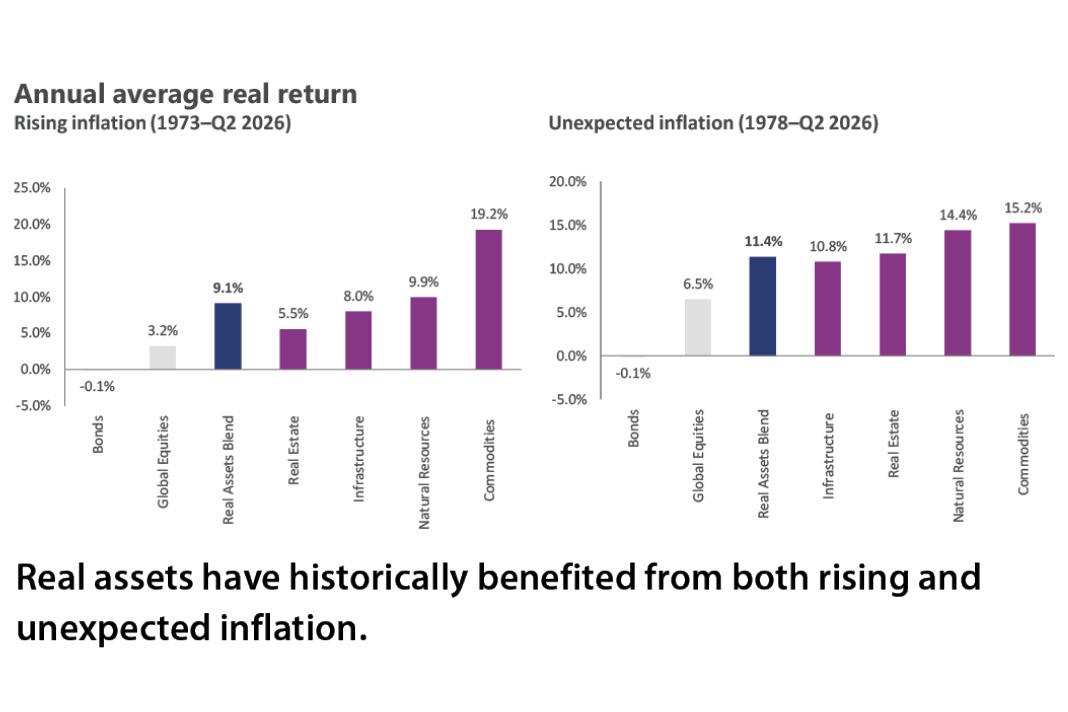
Real assets help preserve purchasing power because their revenues and asset values tend to adjust with inflation. Their positive inflation sensitivity offsets the weak or negative inflation beta that often comes with traditional stock-bond portfolios.
In periods of rising inflation, stagflation or unexpected shocks, real assets have historically delivered strong real returns.
Why is infrastructure resilient even in stagnation?
Infrastructure is resilient because it is tied to essential services and often supported by regulated or contracted cash flows. Assets such as electricity, water, transport and digital connectivity remain necessary even when economic growth is weak. That stability gives infrastructure a defensive quality, with demand that tends to hold up through slower-growth environments.
How relevant is the real-yield/inflation-expectations dynamic for South Africa?
It is highly relevant because South Africa has structurally higher inflation expectations. Real assets have tended to outperform when real yields fall and inflation breakevens rise.
In a market where inflation risk is already part of the macro backdrop, global real assets offer a diversified way to access inflation beta without relying only on domestic instruments.
Please introduce the three Cohen & Steers approved funds.
Cohen & Steers offers three Section 65-approved funds: Diversified Real Assets Fund, Global Listed Infrastructure Fund and Global Real Estate Securities Fund. The diversified strategy blends real estate, infrastructure, resource equities and commodities to deliver inflation sensitivity, diversification and improved risk-adjusted return potential.
The infrastructure strategy focuses on essential, regulated and contracted assets globally. The real estate strategy invests in income-producing properties, including next-generation REIT sectors such as data centres, logistics, towers and life sciences. For South African allocators, the funds serve as flexible building blocks.
As long-term specialists in these categories, Cohen & Steers believes active management, grounded in on-the-ground research and bottom-up security selection, helps drive stronger results.
What is your primary message, and why do you specifically target the South African market?
South Africa is a compelling market because portfolios are making greater use of offshore allowances but remain materially underweight in global listed real assets. As retirement and discretionary portfolios move towards offshore limits, investors need diversified exposures beyond traditional equities.
The core message is straightforward: real assets help clients pursue inflation protection, diversification and long-term return potential through assets that historically have had relatively low correlations to stocks and bonds.
How do global real assets hedge South Africa’s domestic scarcity risks?
South Africa’s electricity constraints, water pressure and logistics bottlenecks underscore the need for dependable infrastructure. Global listed infrastructure and real estate help investors diversify away from domestic scarcity risks by accessing cash flows from markets with deeper capital investment and more stable regulatory frameworks.
In other words, global real assets give investors a way to participate in the infrastructure and real estate themes they need, without relying solely on local conditions.
Do these funds operate as standalone solutions or complementary allocations?
They do both. The diversified real assets strategy works as a single-ticket solution for inflation sensitivity and diversification, while the infrastructure and real estate strategies allow advisors to fine-tune specific exposures. Blending real assets enhances inflation sensitivity, diversification and expected return potential. These strategies serve as portfolio diversifiers, but they are also increasingly tied to some of the most important secular themes unfolding today.
What competitive advantages does Cohen & Steers’ specialisation offer?
Cohen & Steers’ four decades as a specialist real asset manager provide deep research, dedicated global teams and experience across multiple market cycles. The firm manages all major real asset categories within a unified framework and has delivered consistent long-term outperformance through periods such as energy downturns, Covid and geopolitical upheaval.
In a market where real assets expertise is still limited, that specialisation is a meaningful advantage.
What misconceptions do South African planners have about real assets?
A common misconception is that real assets simply mean property or commodities. Another is that the category is too volatile. In reality, real assets span real estate, infrastructure, resource equities and commodities, each with distinct drivers and low correlations to equities and to one another. A blended allocation has historically delivered competitive returns with lower volatility, helping correct the perception that real assets are narrow or overly risky.
What role should real assets play in long-term portfolios?
Real assets should be considered a strategic allocation, not just a short-term tactical trade. They serve as an inflation hedge, a diversifier and a source of growth.
A diversified real assets blend has historically delivered competitive returns with lower volatility than global equities, while also offering strong inflation sensitivity and diversification benefits. For many clients, that supports a permanent allocation sized to their long-term objectives.
If you had one message for planners introducing real assets to clients for the first time, what would it be?
The old era of abundance, defined by just-in-time shipping, globalisation and offshoring, is over. We have entered an era of scarcity and portfolios built for the old environment may struggle to deliver real, inflation-adjusted outcomes.
Real assets offer inflation sensitivity, diversification and exposure to powerful secular growth themes, including AI-driven data demand and the need for dependable energy. With valuations compelling and macro forces aligned, now is an important moment to build more resilient portfolios for the decade ahead.
AI-led investing. Conviction-driven outcomes. From inception the firm has embedded artificial intelligence at the core of its investment process – combining machine learning, data...
The advice industry in South Africa has never stood still. Over the past two decades, we have seen steady progression in professionalism, compliance standards and client outcomes. COFI does not change that trajectory. It accelerates it.
Resistance is often misunderstood, with the person pushing back often being the best informed person in the room, writes Lizanne van Eeden, CFP®, Founder and Lead Consultant, Karenu Consulting.
Oyster Catcher Investments is an independently owned boutique investment manager based in Sandton, Johannesburg.
- Advertisement -
We use cookies on our website to give you the most relevant experience by remembering your preferences and repeat visits. By clicking “Accept”, you consent to the use of ALL the cookies.
This website uses cookies to improve your experience while you navigate through the website. Out of these cookies, the cookies that are categorized as necessary are stored on your browser as they are essential for the working of basic functionalities of the website. We also use third-party cookies that help us analyze and understand how you use this website. These cookies will be stored in your browser only with your consent. You also have the option to opt-out of these cookies. But opting out of some of these cookies may have an effect on your browsing experience.
Necessary cookies are absolutely essential for the website to function properly. This category only includes cookies that ensures basic functionalities and security features of the website. These cookies do not store any personal information.
Any cookies that may not be particularly necessary for the website to function and is used specifically to collect user personal data via analytics, ads, other embedded contents are termed as non-necessary cookies. It is mandatory to procure user consent prior to running these cookies on your website.



 How does a listed real assets strategy differ from owning property or commodity stocks?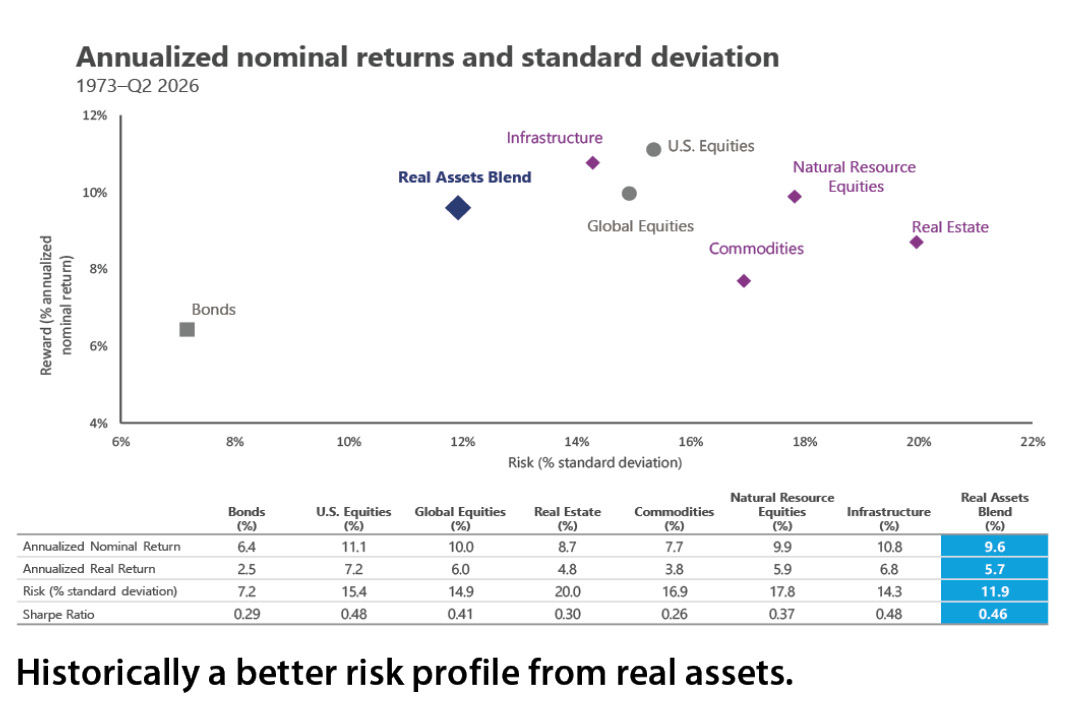
 Why is fear of missing out (FOMO) such a dangerous trap?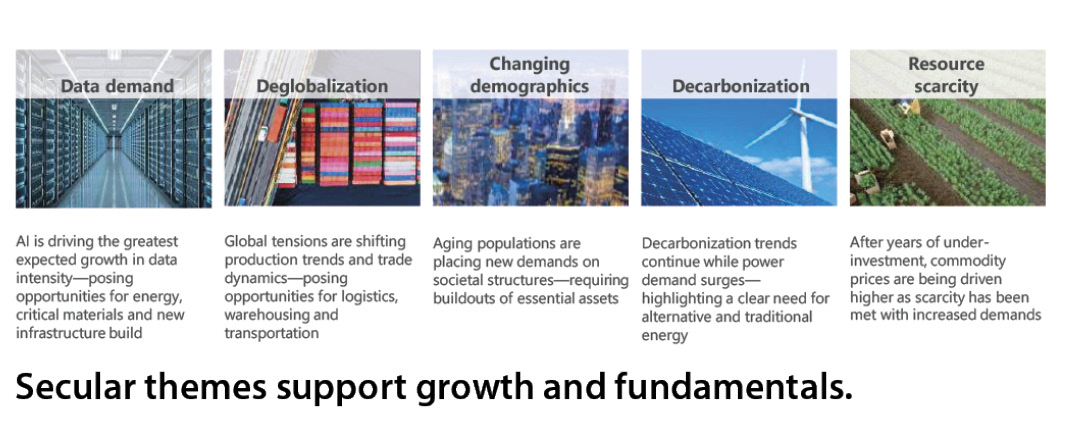
 Why are real assets effective at preserving purchasing power?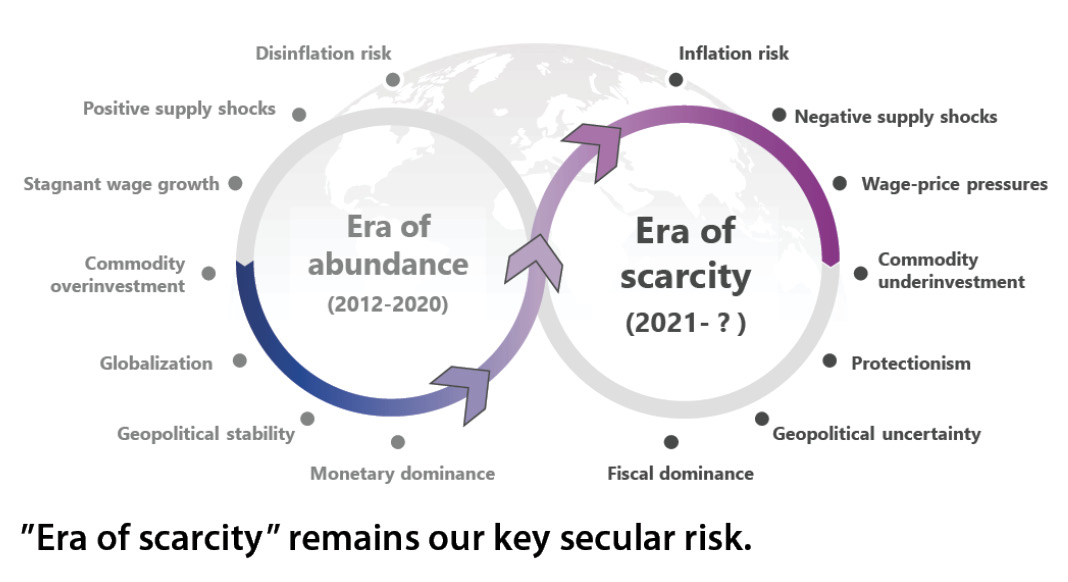
 Do these funds operate as standalone solutions or complementary allocations?