How should financial planners integrate retail investor hedge funds (RIHFs) into client portfolios?
Hedge funds complement long-only building blocks by providing an absolute return stream with lower dependence on market direction. This adds diversification and improves return consistency, helping advisors manage client behaviour during stress periods. Strategies can be matched to client objectives and risk tolerance.
Describe the sources of alpha in Laurium’s hedge funds.
Laurium’s hedge funds generate alpha from multiple sources, including investing in under-valued companies where fundamentals exceed expectations (long alpha) and positioning against overvalued or deteriorating businesses (short alpha). Relative value trades, pair trades, corporate actions and event-driven opportunities target idiosyncratic mispricing, independent of market direction.
Which offshore sectors offer the best diversification against SA-specific risks?
Selected offshore sectors provide exposure to structural growth themes not available in South Africa and diversify macroeconomic drivers within portfolios. An example is US power infrastructure and grid investment supporting the ongoing AI capex build-out.
How do you manage liquidity risk in RIHFs with small-cap exposure?
We manage liquidity risk through explicit sizing rules, daily monitoring and portfolio-level liquidity buffers. Short-position controls are particularly conservative, and funds typically hold more than 50% of NAV in unencumbered cash.
How do you apply the continuous reassessment of investment theses?
We reassess investment theses through on-going review of the original case, portfolio positioning and structured position reviews to reflect changes in fundamentals, price action and market conditions. Research incorporates regular company engagement. We do not typically use formulaic stop-losses but trigger a rigorous review if a stock moves beyond set thresholds and trim positions as they approach limits.
How do you manage spread-compression risk in your Market Neutral strategy?
We manage spread-compression risk through disciplined exposure limits, diversification and downside protection. Gross exposure is capped at 200% of NAV and net equity exposure is targeted between -15% and +15%. We monitor correlations, factor and sector exposures, and use derivative overlays where appropriate.
How does your team account for behavioural biases in selecting short positions?
While our core edge is fundamental, we recognise that short-term inefficiencies are often driven by flows, news and sentiment. We incorporate these through our “special situations” lens and trade timing. On the short book, we focus on stocks where sentiment has swung too far and monitor crowdedness and short interest to avoid overcrowded positions.
How do you maintain flexibility in your retail hedge funds as AUM grows?
We preserve flexibility through capacity awareness and liquid portfolios, supported by disciplined position sizing, liquidity limits and daily monitoring. We manage approximately R7-billion across our hedge fund strategies and believe we can at least double this without changing our approach.
How much does your top-down view determine your hedge funds net exposure?
Our top-down view is an important part of the process, complementing bottom-up research. Macro analysis informs assumptions such as growth, interest rates and currency views, and helps determine sector, factor and net exposure.
How is humility applied in your investment process?
Humility is embedded through acknowledging uncertainty and managing the risk of being wrong. We combine bottom-up research with top-down perspectives and use debate to stress-test assumptions. Portfolio construction focuses on diversification, liquidity and controlled exposures, supported by hedging tools to protect against unpredictable market moves.
About KIM ZIETSMAN |
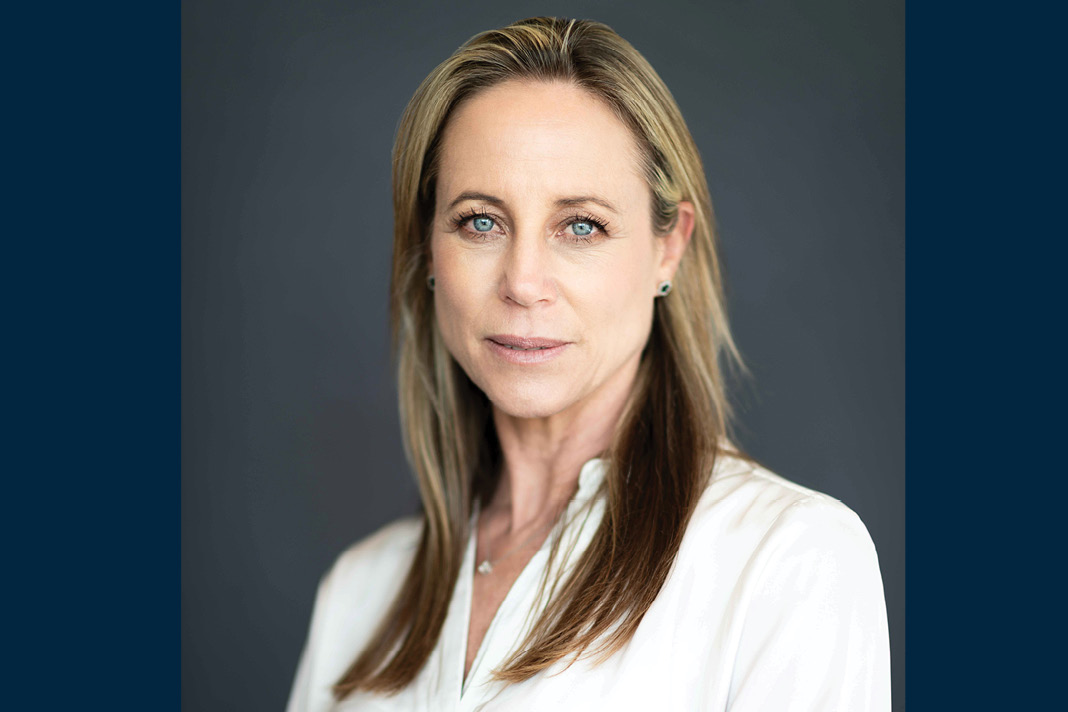
Kim Zietsman joined Laurium Capital in 2013 and plays a key role in strengthening the firm’s client relationships, brand presence and distribution capabilities. She leads the building and maintenance of Laurium Capital’s brand and drives the development and execution of the firm’s marketing, public relations and distribution strategy in South Africa. Prior to joining Laurium Capital, Kim was the CEO of StoneHouse Capital, a subsidiary of the Liberty Group. She previously spent nine years at STANLIB, holding a variety of senior positions, including Head of Offshore Products and Head of the Unit Trust Company. She began her career in finance at RMB Asset Management in 1998, where she built a strong foundation in asset management.Kim has a Postgraduate Diploma in Management (Business Administration) from Wits Business School and is a CFA charterholder.