What makes your business distinctive?
Edify’s origins lie in hedge fund management and our differentiation lies in our deep and extensive knowledge and skill in alternatives in general, and hedge funds in particular. In addition, we have strong skill and experience in managing offshore portfolios.
Who is your ideal client?
We are a niche, boutique DFM and our ideal client is therefore one with whom we can work and enjoy a personal relationship, in a true partnership. In addition, we are suited to clients for whom risk management is important and who are willing to explore the use of alternative strategies to achieve the benefits of asymmetry – ie capturing more of the upside than the downside of a given market, such as equities.
Who are not your clients?
Edify is a dynamic DFM which tries to work with a client’s needs and solve their problems in innovative and flexible ways. We would not exclude anyone as a potential client.
What role do you believe DFMs play in improving client outcomes?
Particularly as it relates to hedge funds, we think that the use of strategies that can control volatility and drawdown risk and yet still generate high real returns (the asymmetry of returns we referenced earlier) can be incredibly powerful and effective in improving client outcomes, especially in products like living annuities, where sequence of return risk is of critical concern. We have the empirical evidence to demonstrate this claim.
Some argue DFMs are just another layer of costs for clients. What is your response?
Like any service provider in the investment industry, DFMs need to be transparent with respect to fees and costs, and demonstrate to clients that the value they add justifies the fees they charge. In some instances, DFMs are able to command lower fees from fund managers than if a client invested directly, which would mitigate the extra fees paid to the DFM.
DFMs enable financial advisors to focus on engaging with and servicing clients, and allow them to spend their time on the important functions an advisor fulfils, while the DFM has the focus and skill to focus on managing investment portfolios in a professional, disciplined and dedicated manner. We would argue therefore that there is justification for the fees a DFM charges.
Some have the view that DFMs should have performance tables like fund managers. What is your perspective?
We take a nuanced approach. While all components of the investment industry require transparency, it is equally true that a DFM should customise its management of a client’s portfolio for that client’s needs, and therefore it may be difficult to make like-for-like comparisons and achieve the kind of consistency and standardisation that performance tables require to be accurate and effective.
In addition, since DFM portfolios do not have the same public reporting standards as, for example, unit trusts, there may be industry participants who would be tempted to “game” the system or generate reports which are not completely accurate or reflective of client experience. We therefore don’t think there is a simple yes or no answer.
What are the biggest challenges you see facing DFMs in the next decade?
In a highly competitive and saturated market, one of the challenges smaller DFMs face is achieving growth and critical mass, especially without the marketing and distribution power of the larger market participants.
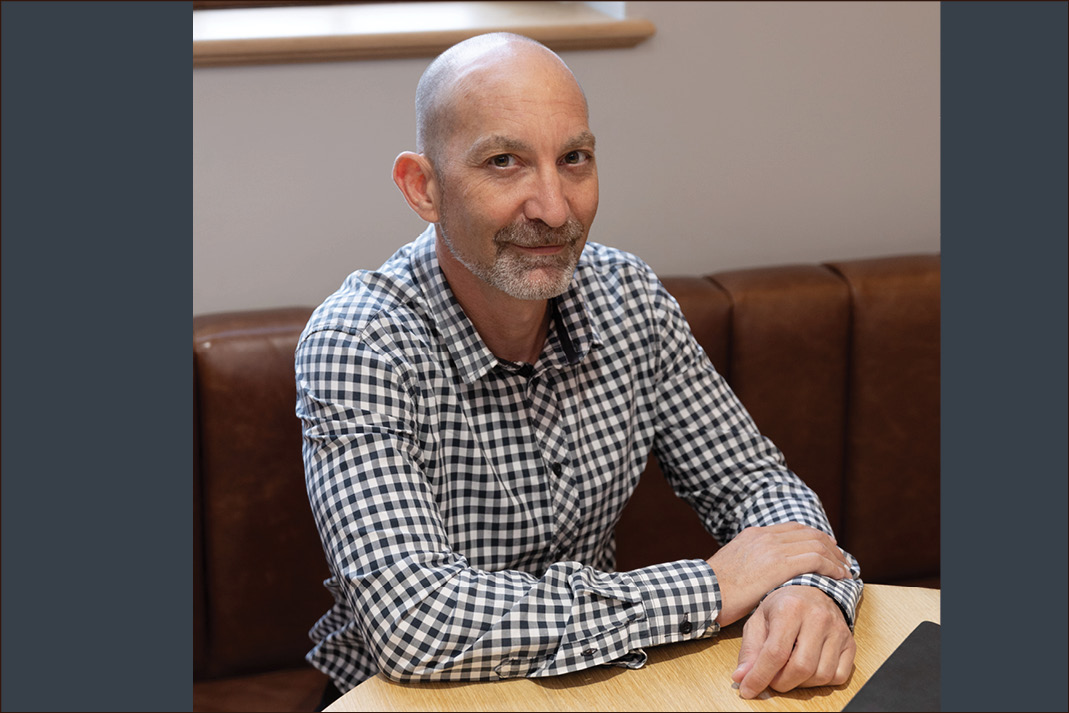
Adam has 20 years of investment experience. Adam has a BA(Hons)LLB degree and is an admitted attorney of the High Court. He also holds the CAIA designation. Adam was previously Head of Global Products at Alexander Forbes Investments and initiated the alternatives investment programme. He later moved to Sanlam Multi-Manager International, where he was Head of Manager Research and Head of Global Portfolios, as well as a member of the Asset Allocation Committee and the Alternatives Portfolio Management Committee.